What to Do When Weather Delays Your Flight
Weather delays don’t guarantee free rebooking or hotel help. Learn how airline waivers work, when DOT refund rules apply, and what to do next.
Save it in this browser to find it later.

When weather delays a U.S. flight, check your airline’s app for a travel waiver and rebooking offer; the terms and available seats depend on that airline. If the airline cancels your flight—or makes a DOT-defined significant change—and you choose not to take the replacement, DOT says you’re entitled to a refund to your original form of payment. Airlines often offer alternate flights, but DOT does not require every airline to put every weather-canceled passenger on its next flight.
Check airline weather alerts before you leave
An airline may issue a weather waiver for certain airports, travel dates, or tickets. The waiver’s rules are specific: check whether your itinerary qualifies, when you must make the change, and which new travel dates or routes are allowed. A waiver does not automatically mean every date is covered or that every fare difference is waived.
Open the airline’s app or website and look for its travel alerts or flight-status page. If you’re eligible and flexible, compare the waiver’s permitted options with waiting for your original flight. Save a copy or screenshot of the terms in case they change.
If the airline cancels, choose between a new flight and a refund
After a cancellation, the airline may offer another flight, but DOT does not require airlines to rebook passengers on alternative transportation. The airline’s own policy, its available seats, and any active waiver determine what it offers. Ask what flights are available and when you need to respond; an airline can set a deadline for accepting a rebooking offer.
If you want to keep traveling, check whether the offered flight works and ask what other routes the airline can provide under its policy. Confirm the new itinerary before leaving the airport or making separate plans.
If you do not want the replacement, tell the airline you decline it and want a refund—not a voucher or travel credit. DOT says you’re entitled to a refund when an airline cancels a flight, regardless of the reason, if you choose not to travel or accept compensation instead. DOT’s refund guidance explains the choices and how to request a refund.
A long delay can also qualify for a refund if it meets DOT’s definition of a significant change and you choose not to travel. That includes a scheduled arrival at least three hours later for a domestic itinerary or six hours later for an international itinerary; certain earlier departures and other major itinerary changes can qualify too. Check DOT’s definitions before deciding whether a delay qualifies.
Airline policies can go further than DOT’s baseline. For example, one carrier’s current customer-service plan says it will rebook customers on its next flight with an available seat at no extra cost, including for disruptions beyond its control such as weather. That is the carrier’s own commitment, not a promise that applies to every airline. DOT’s customer-service dashboard lists airline commitments for disruptions within the airline’s control; it does not create a universal weather-rebooking rule.
Ask what help is available during an overnight delay
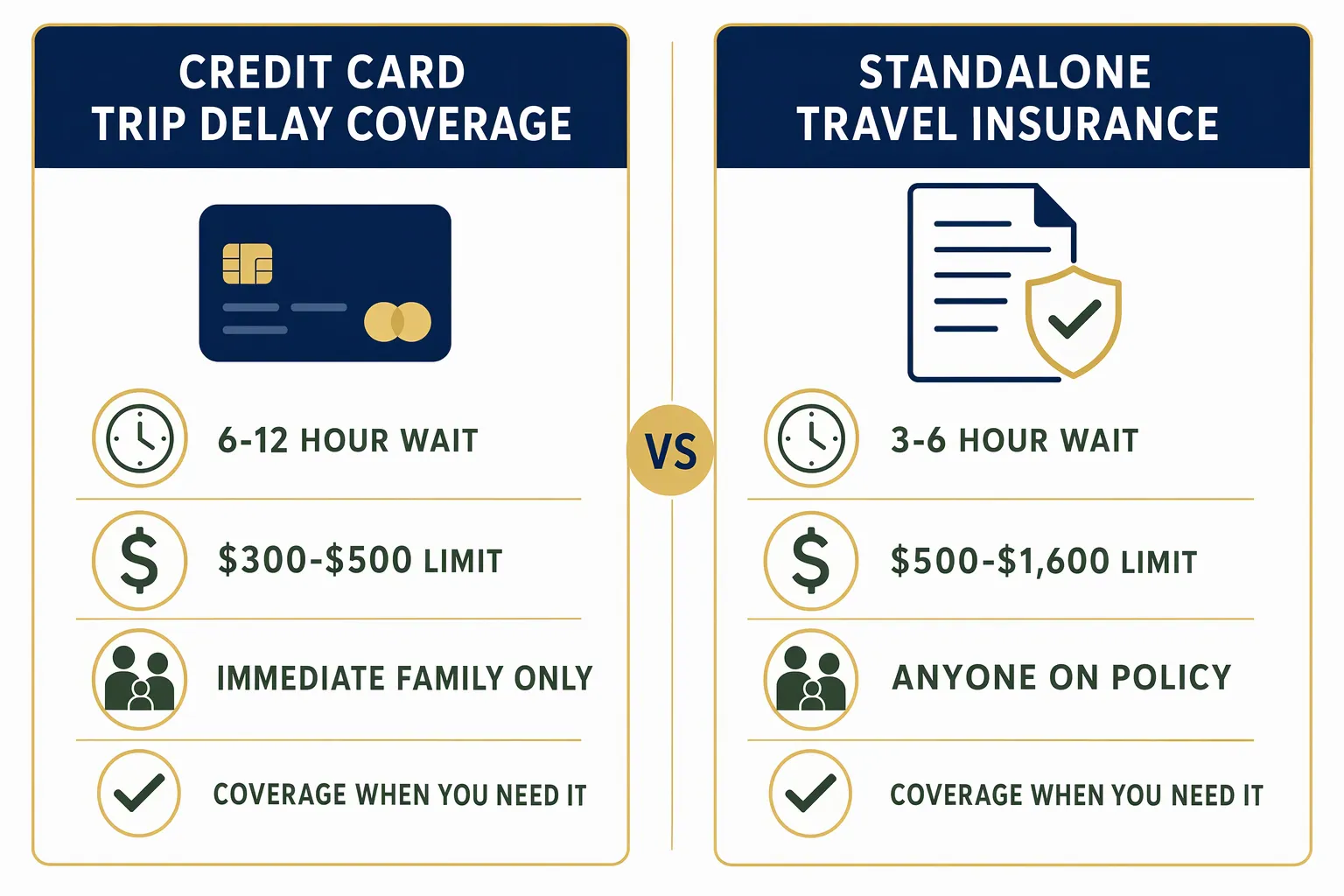
Do not assume an airline will pay for a hotel or meals when weather disrupts a flight. Airline service commitments for those expenses commonly apply to disruptions within the airline’s control, and DOT’s dashboard covers those commitments—not a guarantee of help during a weather event. Ask the airline what it can offer, and check your travel-insurance policy or card benefits before you spend; coverage, covered expenses, and qualifying delay times vary.
Keep itemized receipts, your delay or cancellation notice, and messages from the airline. If you plan to make a claim through an insurer or card issuer, follow its documentation rules and deadlines.
Check the forecast and flight status
Before a winter trip, check the forecast for your departure airport, destination, and connection points. The National Weather Service provides official forecasts, and the FAA’s National Airspace System status page shows active airport and airspace advisories. For your individual flight, rely on the airline’s app or notifications; airport-wide conditions do not confirm whether a particular flight will operate.
If a delay appears, check for a waiver and a new estimated departure time. Ask whether the flight is still expected to operate, what the stated cause is, and when the airline will update you. If the cause changes—for example, from weather to a later aircraft or crew problem—ask about the new reason, since assistance policies can depend on the cause of each disruption.
What to do right now
- Open the airline app and confirm whether your flight is delayed or canceled.
- Check the airline’s weather waiver for covered airports, dates, eligible tickets, and change deadlines.
- If the airline canceled your flight, compare the rebooking offer with the refund option. If you prefer a refund, decline the replacement and follow the airline’s refund process; do not accept a travel credit instead.
- If you want to continue traveling, ask for available alternatives and confirm any costs or deadlines before accepting.
- Save notices and messages, and keep receipts if you pay for meals, lodging, or transportation.
For a decision about your specific itinerary, confirm the rebooking offer and refund process with the airline; if you booked through a travel agent, contact the agent as well.
For official airport updates and current airline travel alerts, read the flight status and airline travel alerts guide.
Need help navigating a flight disruption?
Visit the full Sky Stuck guide for step-by-step information on what to do when your travel plans go wrong.
Visit Sky Stuck Guide