Summer Travel Disruption Checklist: Pack & Prepare
What to pack in your carry-on and prep before summer travel to handle delays and cancellations calmly, with summer-specific tips.
Save it in this browser to find it later.

If you're asking, “What should I pack and prepare for summer travel disruptions?” keep essential medications, a phone charger and power bank, a change of clothes, and toiletries in your carry-on. Save your itinerary and airline contact details before you leave. If a delay becomes overnight, you'll have basics to stay comfortable while you ask the airline what options are available.
What to pack in your carry-on for overnight delays
Your carry-on is your safety net when flights are disrupted. Even if you normally check everything, keeping these essentials with you means you can handle an unexpected overnight delay without stress.
Medications and health essentials
Pack at least two days' worth of any prescription medications in their original bottles, plus basics like pain relievers, allergy medication, or anything you take regularly. If a delay separates you from your checked bag, you won't miss doses.
Phone charger, cable, and power bank
A dead phone during a disruption cuts you off from airline updates and contact with family. Bring your charging cable, wall adapter, and a portable power bank. Make sure the power bank is in your carry-on, not checked luggage—TSA and FAA rules require spare lithium batteries to stay in the cabin.
Change of clothes and basic toiletries
One full change of clothes (underwear, shirt, socks) and travel-size deodorant, toothbrush, and face wipes can make a huge difference if you're stuck overnight. You don't need a full outfit—just enough to feel clean and sleep in if needed.
Snacks and empty water bottle
Airport food during disruptions can be expensive or sold out when everyone's stuck. Shelf-stable snacks like granola bars, nuts, or crackers keep you going. Bring an empty reusable water bottle to fill after security—staying hydrated helps when you're managing a long, stressful wait.
A light layer
Airports and planes can be cold, and if you're sleeping in a terminal overnight, you'll want a cardigan, hoodie, or wrap. It doubles as a pillow in a pinch.
Documents and contacts to have ready
When a flight is cancelled or delayed, you'll need certain information quickly. Having it saved and accessible makes it easier to check your booking and ask about available options.
Booking confirmation and itinerary
Save a screenshot of your booking confirmation (confirmation number, flight numbers, departure and arrival times) and your full itinerary. If your phone dies or you lose service, the screenshot still works. Keep a printed copy in your bag if you prefer paper backups.
Travel insurance policy (if you have it)
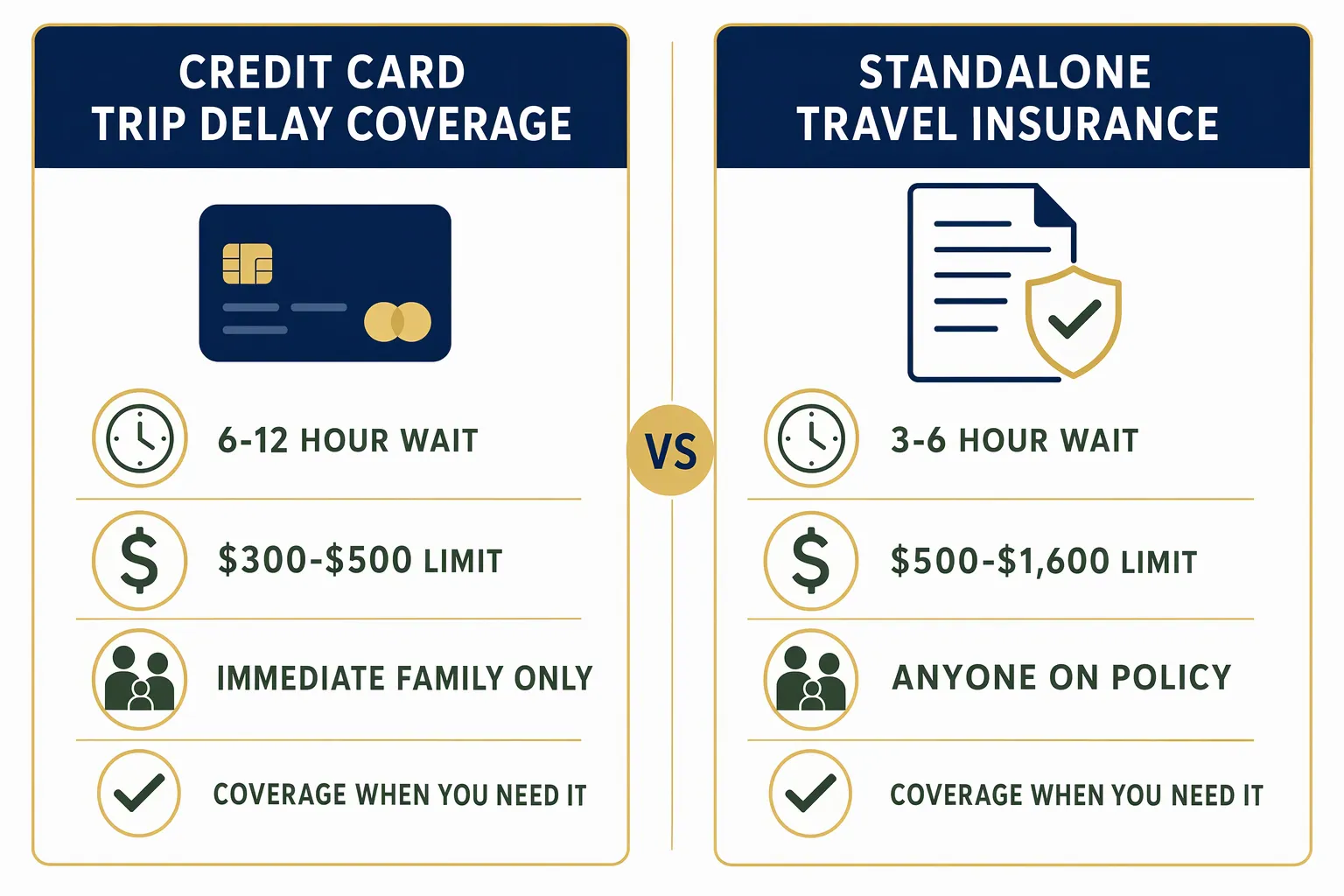
If you bought travel insurance, save the policy number and the insurer's contact information in your phone. Know what your policy covers—most trip delay coverage kicks in after a 3- to 12-hour delay and reimburses meals, hotels, and transportation. See does travel insurance cover flight delays for what's typically included.
Airline customer service numbers
Save your airline's customer service number before you get to the airport. When everyone's on hold after a cancellation, calling can be faster than waiting in the airport line. Some airlines also offer text or app-based chat for rebooking.
Emergency contact and destination address
Keep one emergency contact saved in your phone (and written down in your wallet), and have your hotel or destination address handy. If you're meeting someone at your destination, share your itinerary with them so they know if plans change.
Pre-travel prep that helps during disruptions
A little preparation the day before you leave makes disruptions easier to handle when they happen.
Download the airline's app and turn on notifications
Most airlines send delay and cancellation alerts through their app before they're announced in the airport. Download the app, log in with your booking, and turn on push notifications. You may get a disruption notice while you're still at home or on the way to the airport, giving you time to check what options are available before you arrive.
Know your basic rights
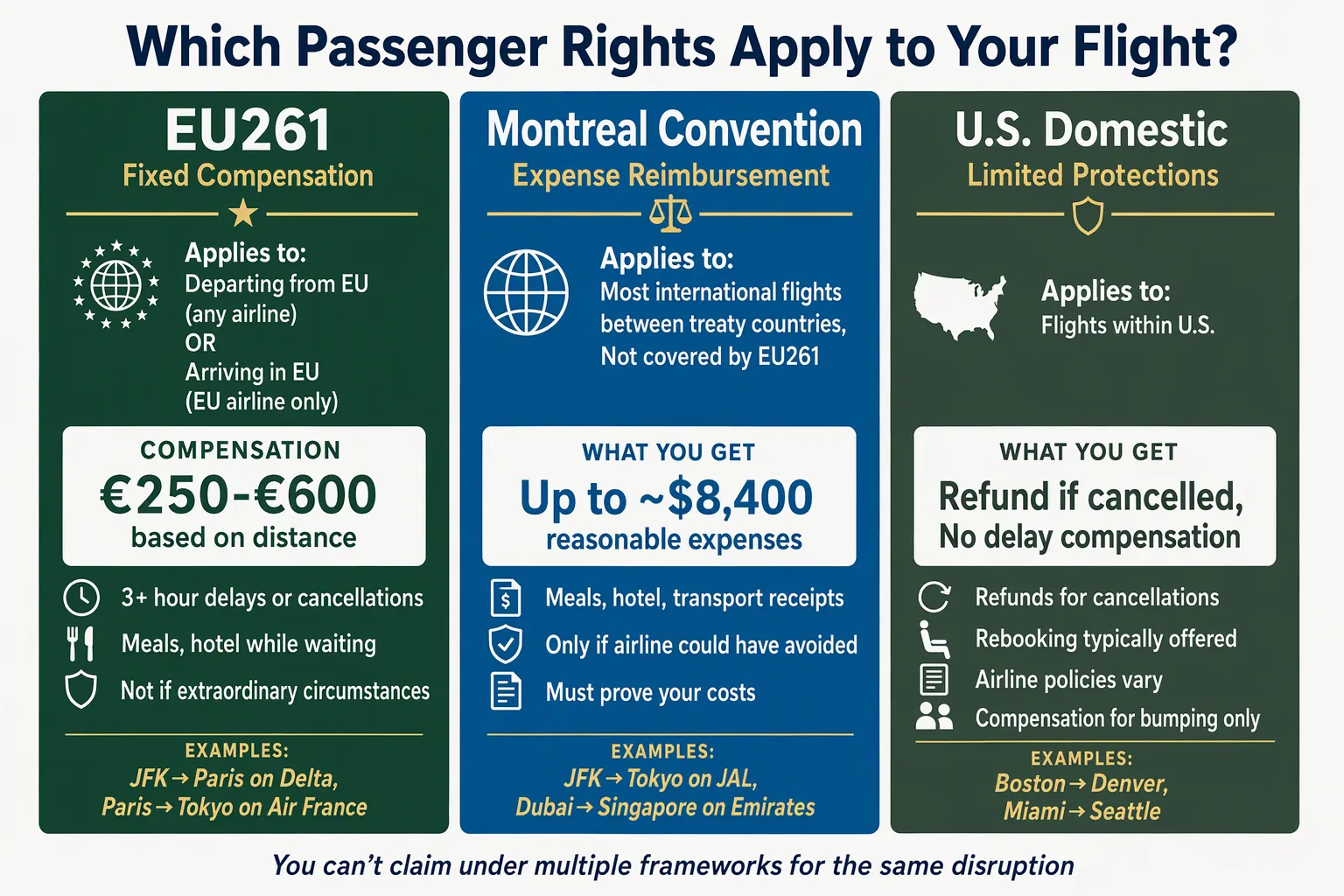
For flights covered by U.S. Department of Transportation rules, if an airline cancels your flight or makes a significant change or delay and you choose not to travel or accept an alternative, you are generally entitled to a refund to your original form of payment. DOT defines which schedule changes count as significant. See the U.S. DOT's refund guidance.
A refund right does not itself require the airline to offer a replacement flight. Airlines often offer rebooking, but DOT does not require them to offer an alternative.
If you prefer to travel, ask the airline what options it offers. If you prefer a refund, make that clear before accepting another flight or travel credit. See what to do when your flight is cancelled for practical steps.
In the U.S., federal rules generally do not require airlines to provide meals, hotel stays, or delay compensation. Airline policies and commitments differ.
The DOT's airline cancellation and delay dashboard lists commitments for controllable disruptions. Check the airline's own terms to see what applies, including when weather is involved.
EU261 generally covers flights within the EU and flights departing the EU, regardless of carrier. A flight arriving in the EU from outside it is generally covered only if an EU airline operates it. The rules also apply to flights to and from Iceland, Norway, and Switzerland.
For eligible passengers on a covered flight, arrival at the final destination three or more hours late may qualify for compensation, unless the airline proves extraordinary circumstances; route and other eligibility conditions matter. Check the operating carrier for each flight and keep your itinerary and delay notices. See the official Your Europe passenger-rights guide and the text of Regulation 261/2004 on EUR-Lex.
Have a backup plan
Before you leave, think through one simple backup: if your flight cancels and there are no same-day options, would you rather rebook for the next morning, rent a car, or take a train? You don't need to book anything in advance—just knowing your preference saves decision-making stress in the moment.
Check the weather loosely
You don't need to track every forecast, but a quick look at weather for your departure city, any connections, and your destination can help you spot potential delays. Summer thunderstorms often build in the afternoon and evening, especially in the South and Midwest, and can ripple through the system. If storms are likely, consider an earlier flight if your schedule allows.
Summer-specific tips for travel disruptions
Summer travel brings higher passenger volumes, afternoon thunderstorms, and occasional heat-related delays. Knowing what to expect helps you plan around the busiest times.
Thunderstorm season peaks in summer
Thunderstorms are the most common cause of summer flight delays. They're hardest to predict and often develop quickly in the late afternoon and evening, especially from May through August. Flights to and from the South, Midwest, and East Coast are most affected. See what to do when weather delays your flight for steps to consider if weather delays your flight.
If you have flexibility, morning flights are less likely to be delayed by afternoon storms, and they have more recovery options if something goes wrong early in the day.
Heat delays are real
Extreme heat (usually above 110°F) can prevent planes from taking off safely because the air is too thin for enough lift. This happens most often in Phoenix, Las Vegas, and Palm Springs during heat waves. If you're flying to or from a desert city in June, July, or August, check the forecast—heat delays usually happen in the afternoon and clear up by evening when temperatures drop.
Peak travel volume means fewer backup options
Summer is the busiest travel season, so flights are fuller and airports are more crowded. If your flight is cancelled, there may not be an open seat on the next flight—or the next several flights. Having your airline app ready and contacting customer service when you receive a notice can help you understand available options. What is available depends on seats, routes, and airline policies.
If you're traveling during major holidays (Memorial Day, Fourth of July, Labor Day), expect even higher volume and plan extra time for security and check-in.
Travel waivers during big storms
When a major storm system (like a hurricane or a large winter storm in an unusual season) is forecast, airlines sometimes issue travel waivers that let you change your flight without a change fee before the disruption happens. Waiver terms vary and may not cover a fare difference; they usually apply to specific cities and date ranges. If you're flying during a named storm or severe weather event, check your airline's travel alerts page the day before you're scheduled to leave.
What this checklist does
This isn't a guarantee against disruptions, but it's a way to feel more in control when plans change. You'll have what you need to stay comfortable, key details ready to ask about available options, and a sense of what to expect during the busiest travel season of the year. If a disruption happens, you'll have practical steps to take.
Need help navigating a flight disruption?
Visit the full Sky Stuck guide for step-by-step information on what to do when your travel plans go wrong.
Visit Sky Stuck Guide